
Copperhouse versus Foundry – The Rival Town
Copperhouse versus Foundry – The Rival Town
Today, Hayle is one town with a strong sense of community. But there was a time when it was effectively two towns, each with its own identity, industries, shops and loyalties. To many local people, you were either “from Copperhouse” or “from Foundry”—and the rivalry between the two was very real.
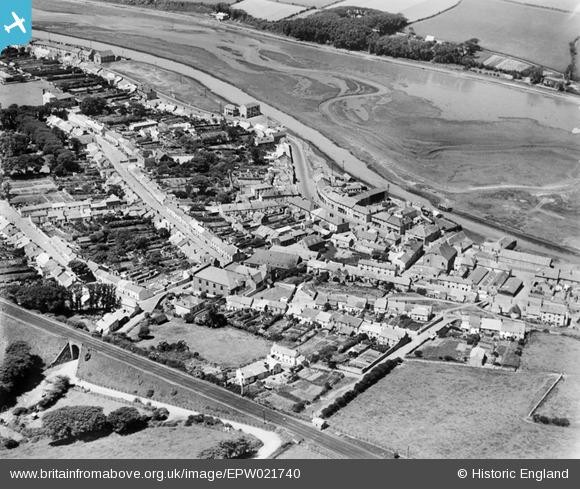
The story began in the eighteenth century, when two powerful industrial companies established themselves on opposite sides of the Hayle estuary. To the east was the Cornish Copper Company, founded at Copperhouse in 1758, where copper ore was smelted and refined. To the west was Harvey’s Foundry, established by John Harvey in 1779, producing steam engines, heavy machinery and engineering equipment that would become famous around the world.
Although only a short distance apart, the two communities developed almost independently. Each company built houses for its workers, provided shops and services, and even supported schools and places of worship. Employees often spent their entire working lives with one company, and family loyalties could continue for generations.
Competition between the two firms was intense. Both wanted the best craftsmen, the largest contracts and the strongest reputation. Harvey’s became internationally renowned for engineering excellence, while the Cornish Copper Company was one of Britain’s leading copper smelting businesses. Their success brought prosperity to Hayle, but it also fuelled a healthy local rivalry.
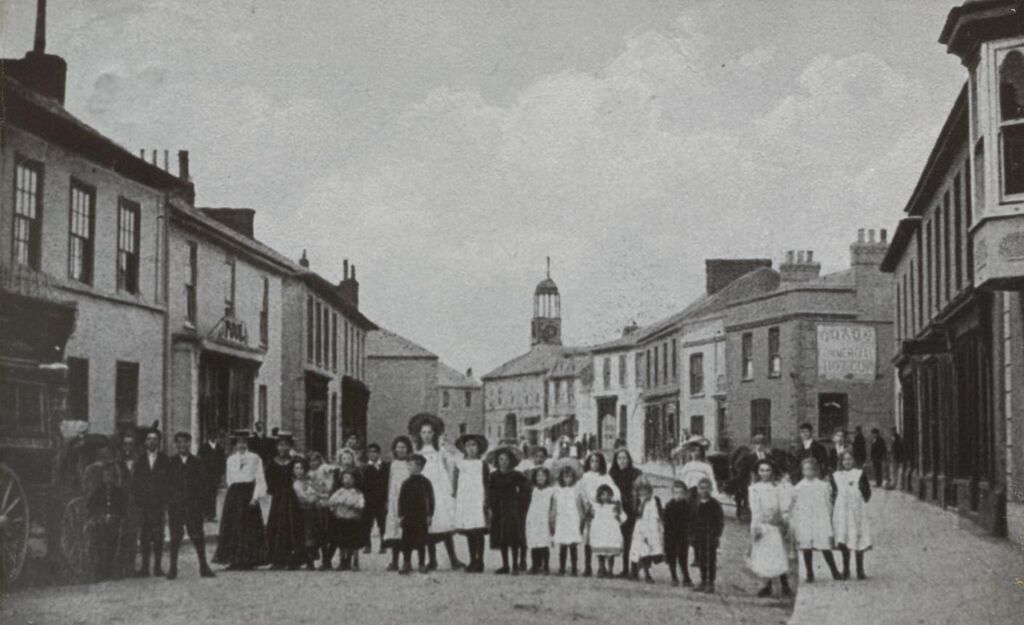
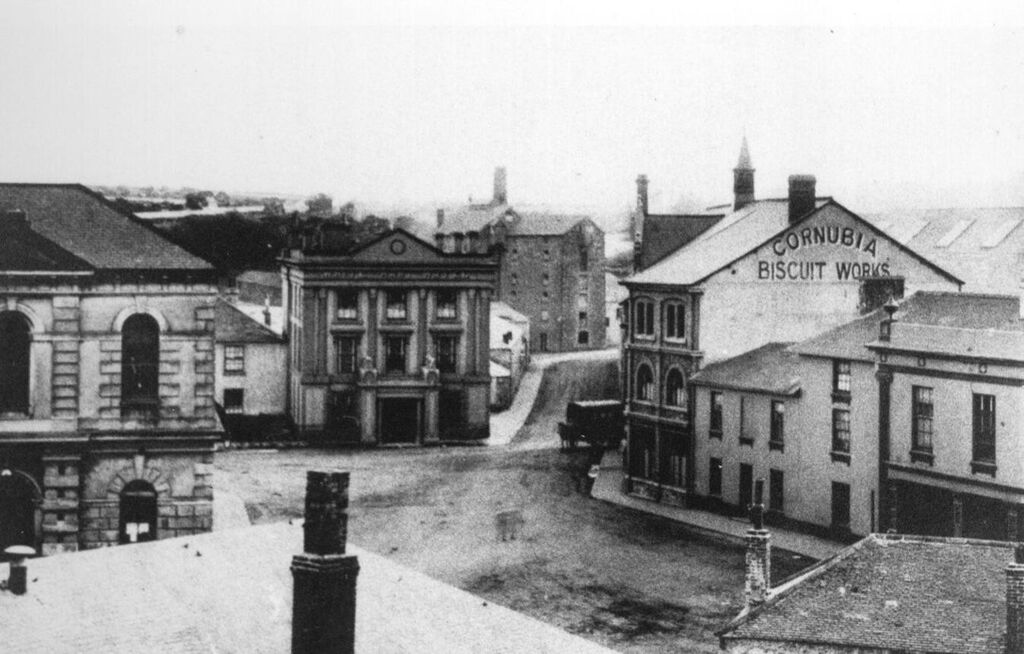
The differences could even be seen in daily life. Foundry developed around Harvey’s engineering works, with grand buildings such as the White Hart Hotel reflecting its growing commercial importance. Copperhouse, centred on the smelting works and market area, developed its own character as a busy industrial and trading community. Each had its own pubs, shops, traditions and social life.
The rivalry wasn’t hostile in the modern sense, but there was plenty of friendly competition. Local sporting events, celebrations and community activities often reflected the divide, with residents proudly identifying themselves with one side or the other. Older Hayle residents still remember stories handed down by parents and grandparents about the good-natured banter between “Foundry folk” and “Copperhouse folk.”
By the late nineteenth century, changing industrial fortunes began to reshape both communities. The Cornish Copper Company declined as the copper industry moved closer to overseas mines, while Harvey’s Foundry adapted by concentrating on engineering and shipbuilding. Gradually, improved transport, expanding housing and local government brought the two settlements closer together.
In 1898, the separate communities were formally united under the newly created Hayle Urban District Council, marking an important step towards the single town we know today. Even so, the distinct identities of Copperhouse and Foundry have never completely disappeared.
Walk around Hayle today and you’ll still notice the differences. Foundry Square retains its elegant Georgian buildings and industrial heritage, while Copperhouse has its market square, historic streets and unique character. They are two halves of the same town, each telling a different chapter of Hayle’s remarkable story.
Far from weakening Hayle, this friendly rivalry helped make it stronger. The competition between two ambitious industrial communities encouraged innovation, attracted skilled workers and brought international recognition to a small Cornish town whose influence reached around the globe.
Did You Know?
- Copperhouse takes its name from the copper smelting works established there in 1758.
- Foundry grew around Harvey’s Foundry, founded in 1779.
- For much of the nineteenth century, the two communities operated almost as separate towns.
They were formally united under Hayle Urban District Council in 1898, but many residents still proudly identify with either Copperhouse or Foundry today.