
Elizabeth Carne
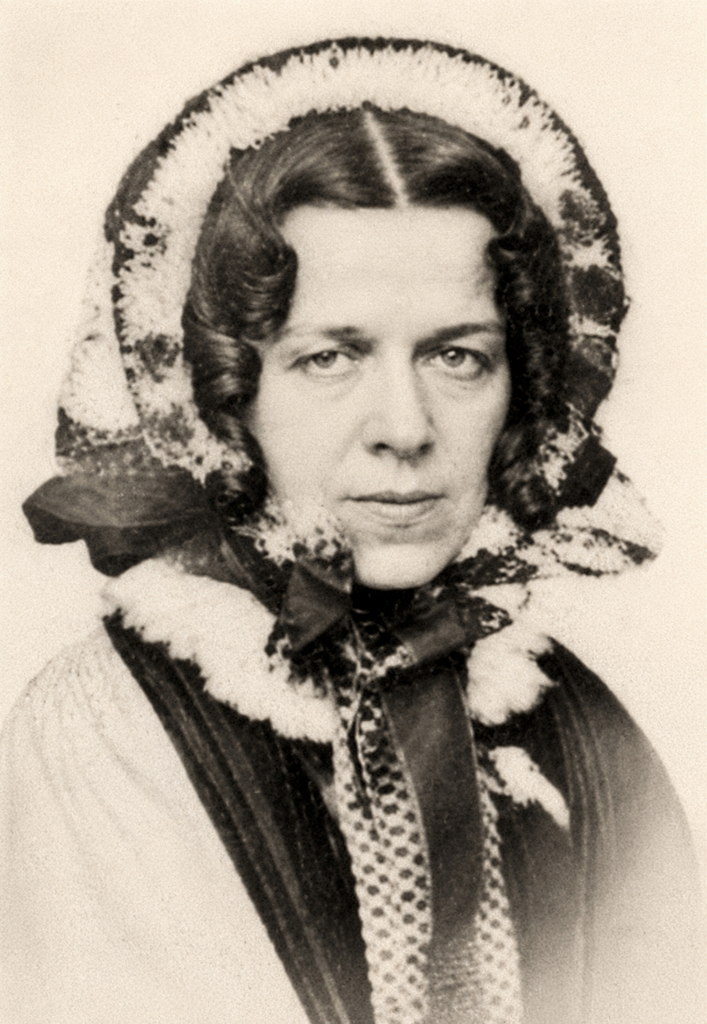
Elizabeth Carne was born in 1817 at Riviere House, Phillack, now a Grade II listed building. This Georgian house belonged to the Cornish Copper Company and commanded an impressive view over what was then the bustling industrial shipping port of Hayle. The cellars housed her father’s experimental laboratories and a small foundry, which were visited by eminent men of the time, including Humphry Davy. It was an exciting home for a curious child.
Elizabeth (a distant relative of the Brontës) was the seventh of eight children born to Joseph and Mary Carne, and the second daughter to be named Elizabeth. The first Elizabeth died shortly after birth. The family were wealthy, and Elizabeth led a privileged life, allowing her to pursue academic and philanthropic interests. Her father, Joseph, was a managing partner of the Cornish Copper Company, a mining engineer and, later, a banker.
When Elizabeth was a child, the family moved to Chapel Street, Penzance, to what is now a hotel adjacent to St Mary’s Church. Here, her father joined the bank established by her grandfather. Following his death, Elizabeth was destined to take up his leading position at the bank, an unprecedented step for a woman at the time.
Joseph shared his passion for collecting fossils, ore specimens and minerals with Elizabeth. In turn, she became an accomplished geologist, delivering several scientific papers to the Geological Society of Cornwall, becoming the first woman to do so and later its first female member. Quite an achievement. Elizabeth inherited, catalogued and expanded her father’s impressive mineral collection, now owned by the Sedgwick Museum of Earth Sciences.
With her contemporaries, Miss Hockin and Miss Tyacke, Elizabeth furthered her interest in conchology, developing a specimen case that could be transported to present their finds, including several rare Cornish specimens. Her illustrated records of shells found on nearby beaches are both impressive and detailed. These are complemented by her sketches of molluscs, studied alongside her sister, Caroline. Their collection of molluscs was donated to the Penzance Natural History Museum in 1899.
The family’s strong Wesleyan Methodist beliefs and values played a significant part in Elizabeth’s life. Through these, she developed a lifelong commitment to philanthropy, promoting education and addressing social problems, as well as declining religious and spiritual values. Elizabeth’s grandparents were active members of Cornwall’s growing Methodist movement, and her grandfather was regarded as the county’s father of Methodism. During his visits to the area, John Wesley stayed at the Carne family home.
Elizabeth’s father ensured that his daughters received an excellent education at home, where there was a strong Methodist emphasis on hard work, study and community service. This is reflected in the books and articles Elizabeth wrote, some under the pseudonym of John Altrayd Wittitterly. She articulated a strong belief in equality and the integration of communities, regardless of social status.
Elizabeth possessed an intellect recognised by many eminent visitors. One such visitor was John Stuart Mill, the British philosopher, who described her intellect as “remarkable”. When he visited, Elizabeth was only 15 years old, and he was particularly surprised by her intelligence because of both her gender and the remote location in which she had been raised. The presence of such distinguished intellectuals in the Carne household, together with the atmosphere of debate and discussion they fostered, undoubtedly encouraged Elizabeth’s own development and thinking.
Elizabeth’s second book, Country Towns, and the Place They Fill in Modern Civilization (1868), contributed to contemporary debates on social, educational and moral philosophy. In it, she expressed a passionate belief in the dangers posed by continued inequality, ignorance and poverty. She also voiced concerns about overcrowded slums, poor drainage, inadequate housing and polluted air—issues that remain strikingly relevant today.
After inheriting her father’s estates, Elizabeth devoted both her wealth and her time to improving the education and wellbeing of poor and disadvantaged local people. She distributed food, clothing and books to those most in need, established and funded three, possibly four, local schools, and donated money towards the purchase of land for community projects.
Elizabeth’s passion for the natural environment extended to Boscawen-Ûn. She purchased the site after learning that a local farmer intended to demolish it. At the time, the stone circle had a wall running through its centre, which Elizabeth had removed. She also commissioned the construction of the surrounding wall that still stands today, helping to protect this important historic monument. Elizabeth died of typhoid fever in 1873 and is buried in the churchyard at Phillack, where her tomb can still be seen.