Famous Ships Built or Repaired in Hayle
The Ships That Carried Hayle’s Name Around the World
Although Hayle is best remembered for its world-famous steam engines, relatively few people realise that it was once one of Cornwall’s most important shipbuilding towns. During the nineteenth century, the shipyards at Harvey’s Foundry and the Cornish Copper Company built everything from coastal schooners to ocean-going steamships, while the harbour became an important centre for ship repair.
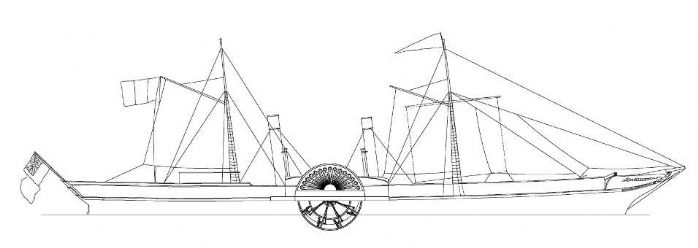
THE PRUSSIAN EAGLE 1846
The Prussian Eagle, launched in 1846, marked a turning point in the history of Hayle’s shipbuilding industry. Built by Harvey & Co., it was the first iron steamship constructed at the company’s Hayle shipyard, demonstrating that Cornish engineers could compete with Britain’s leading industrial ports in the rapidly developing age of steam.
Unlike the traditional wooden sailing ships that had previously dominated coastal trade, the Prussian Eagle featured an iron hull and was powered by a steam engine built by Harvey’s renowned foundry. Iron shipbuilding required new engineering skills, precision metalworking and advanced riveting techniques, all of which showcased the exceptional craftsmanship of Hayle’s workforce.
The vessel was built for service on the European mainland, reflecting Harvey’s growing international reputation. Its successful construction helped secure further contracts for iron steamships and tugs, allowing Hayle to develop into one of Britain’s most respected provincial shipbuilding centres. During the following decades, Harvey’s went on to build dozens of iron and steel vessels, culminating in the launch of the SS Ramleh in 1891, the largest ship ever built in Cornwall.
Although few contemporary images of the Prussian Eagle have survived, its importance to Hayle cannot be overstated. It represented the moment when the town embraced the Industrial Revolution’s newest technology, laying the foundations for almost half a century of successful iron and steel shipbuilding.
Did you know?
Harvey & Co.’s first outside shipbuilding commission came in 1846, when the company built steam-powered iron tugs for the River Rhine. This contract marked the beginning of Hayle’s reputation as an international shipbuilding centre.
Hayle Pump Fact:
The Prussian Eagle was the pioneer that proved Harvey’s could build iron steamships. Without its success, famous later vessels such as the SS Cornubia and SS Ramleh might never have been built in Hayle.
SS Ramleh – Cornwall’s Largest Ship
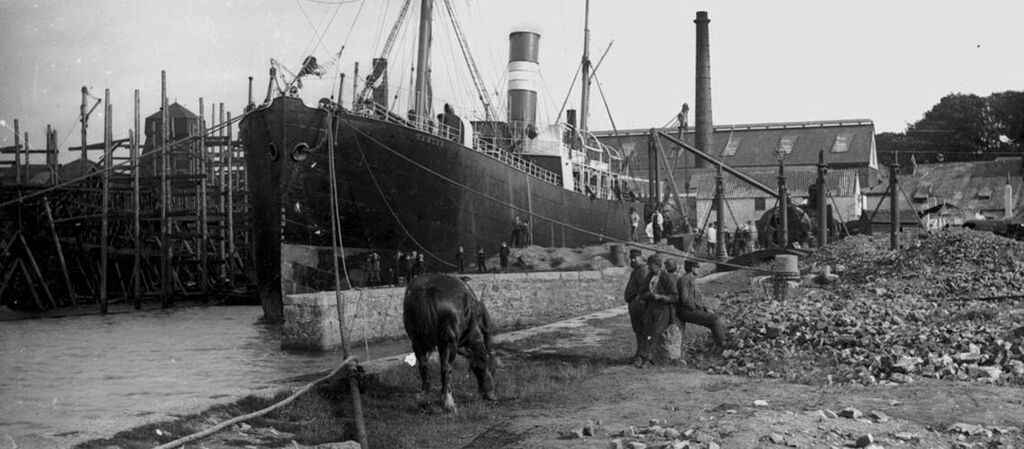
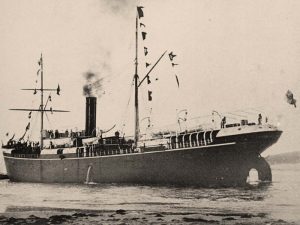
The SS Ramleh was the greatest ship ever built in Cornwall and one of the most remarkable achievements in Hayle’s industrial history.
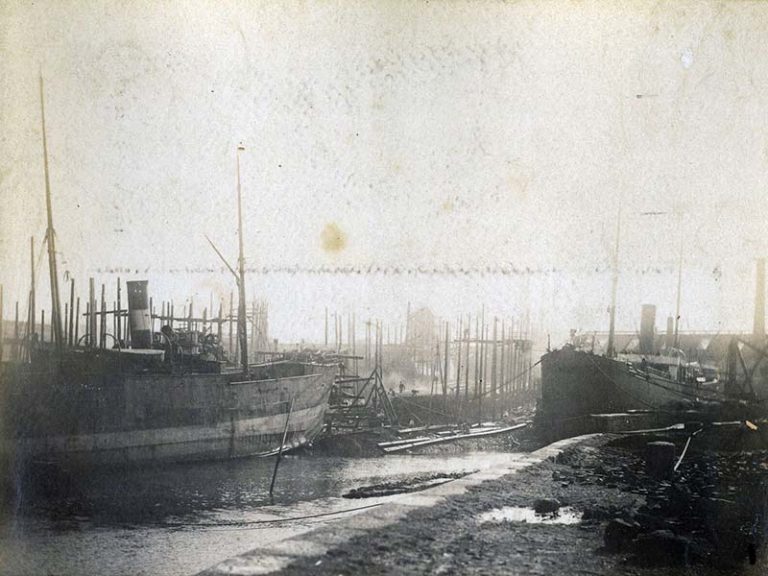
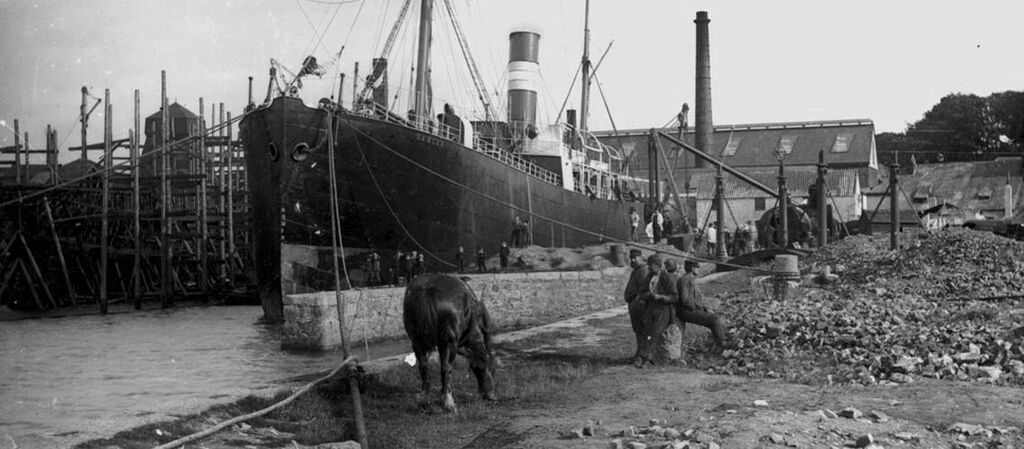
Built by Harvey’s of Hayle and launched in 1891, the Ramleh was an enormous vessel for its time, weighing approximately 4,000 tons. It was constructed at Harvey’s shipyard on the South Quay, close to the area now occupied by Jewson’s and the former industrial waterfront. The ship was launched from the historic slipways at Carnsew, where Harvey’s had developed a major shipbuilding industry.
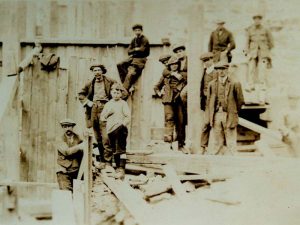
The construction of such a large iron steamship demonstrated the extraordinary skills of Hayle’s engineers, shipwrights, boilermakers and foundry workers. Harvey’s had expanded its shipyard in 1888, installing new slipways, boiler works and machine shops so that it could compete with the leading shipbuilders of Britain. At its peak, Harvey’s employed around 1,200 men, making it one of the largest employers in Cornwall.
The Ramleh was not only Hayle’s largest ship but also the largest vessel ever built anywhere in Cornwall. Its construction was a proud moment for the town and represented the high point of Hayle’s shipbuilding industry. Harvey’s built 79 vessels at its Hayle shipyard during the nineteenth century, but none matched the scale or importance of the Ramleh.
Today, little remains visible of the vast shipyard where the Ramleh was built. However, the historic quays, docks and slipways around South Quay and Carnsew still tell the story of a time when Hayle was a major centre of engineering, shipbuilding and international trade.
The SS Ramleh remains a powerful symbol of Hayle’s industrial ambition — a giant ship built in a small Cornish town and a lasting reminder of the skill and achievement of Harvey’s of Hayle
SS Cornubia – Hayle’s Pride
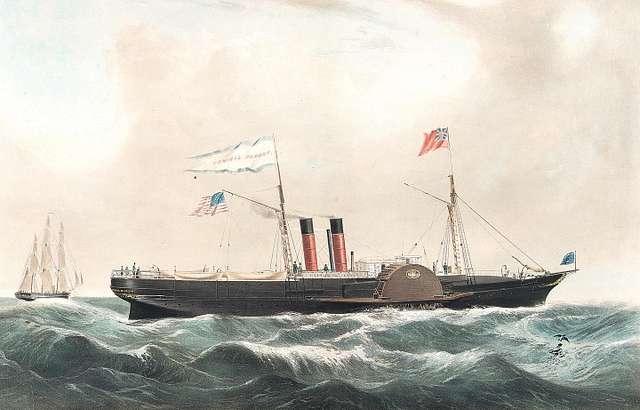
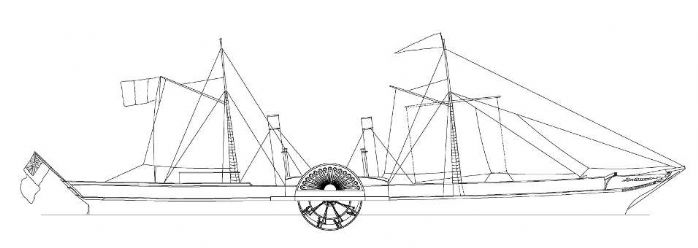
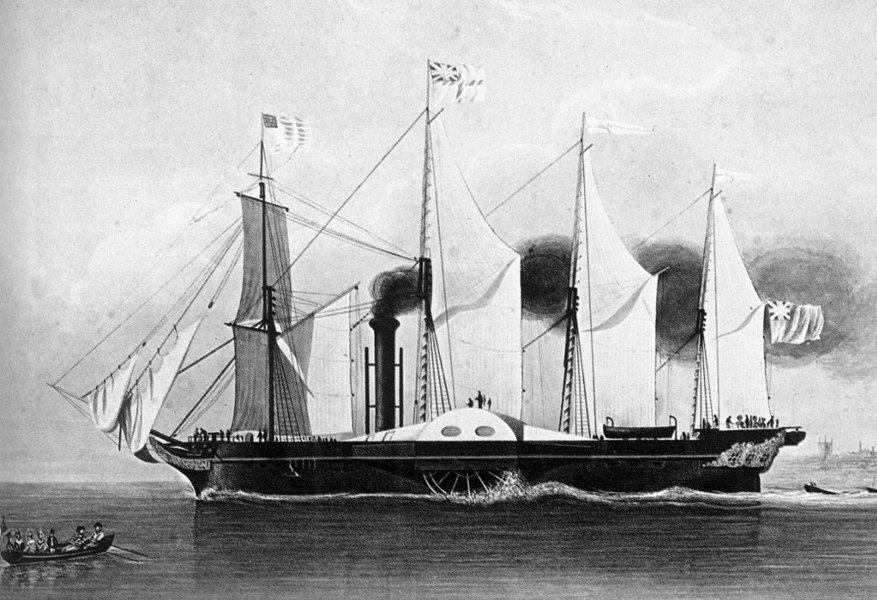
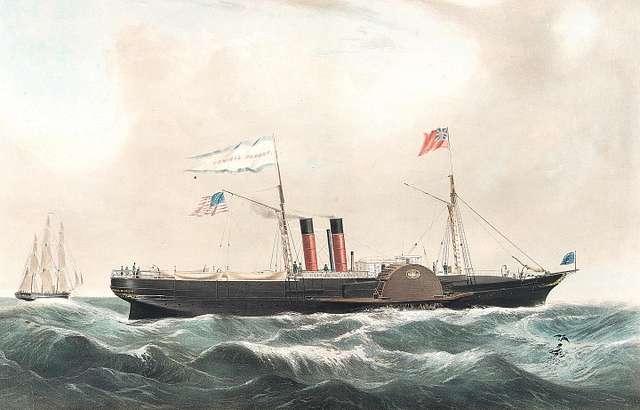
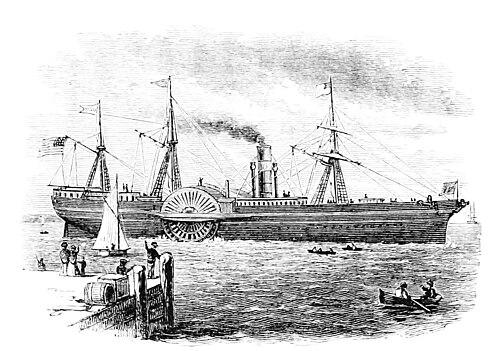
Long before the railway reached West Cornwall, the SS Cornubia was the pride of Hayle. Built by Harvey & Co. and launched on 27 February 1858, she was the largest and most advanced passenger vessel ever constructed in Cornwall at the time. An estimated 4,000–5,000 people gathered at Harvey’s shipyard to watch her spectacular launch, reflecting the excitement and confidence surrounding Hayle’s thriving engineering industry.
The Cornubia was an elegant iron paddle steamer, measuring 210 feet (64 metres) long with a beam of 24 feet 6 inches (7.5 metres). Powered by Harvey-built twin oscillating steam engines producing around 230 horsepower, she could reach speeds of more than 18 knots, making her one of the fastest vessels operating around the British coast.
Commissioned by the Hayle and Bristol Steam Packet Company, the Cornubia carried passengers, mail and cargo between Hayle and Bristol, providing Cornwall with an essential transport link before the Great Western Railway extended into West Cornwall. Her luxurious accommodation, spacious saloons and large plate-glass windows earned glowing reviews from Victorian newspapers, which described her as “something out of the common run.”
The ship’s story took a dramatic turn during the American Civil War. Sold to Confederate interests in 1861, the Cornubia became one of the South’s most successful blockade runners, making 22 successful voyages carrying desperately needed supplies through the Union naval blockade. Her speed and shallow draft made her exceptionally difficult to catch. On her twenty-third voyage, however, she was intercepted off the coast of North Carolina and captured by Union forces in November 1863. She was subsequently commissioned into the United States Navy as USS Cornubia and served until the end of the war.
Today, the SS Cornubia remains one of the most famous ships ever built in Hayle. She showcased the remarkable skills of Harvey’s engineers and shipwrights and carried the name of Cornwall—Cornubia, the Latin name for the county—to both sides of the Atlantic. Few vessels built in Cornwall have enjoyed such an extraordinary career, making the Cornubia one of Hayle’s greatest maritime achievements.
Another notable vessel was the SS Cornubia, an elegant passenger steamer built by Harvey’s. She operated along the south coast of England and later found service elsewhere around the British Isles. The Cornubia demonstrated that Hayle’s shipbuilders could produce fast, reliable vessels as well as the giant beam engines for which they were internationally renowned.
The Shipyards of Harvey’s
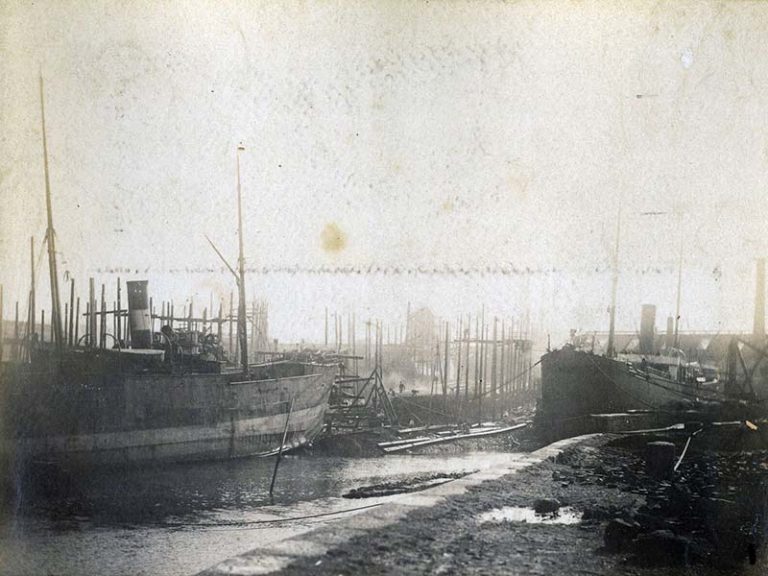
Shipbuilding began in Hayle during the early nineteenth century with the construction of timber lighters and small coasting schooners. As Harvey’s engineering reputation grew, so did its shipyard.
By the 1880s, the company had invested heavily in expanding its facilities with modern slipways capable of launching large iron and steel steamships. The shipyard became one of the principal parts of Harvey’s business as demand for mining engines gradually declined.
Building for War
Hayle’s maritime skills proved invaluable during both World Wars. While the great days of commercial shipbuilding had passed, the town’s slipways were used to repair vessels and construct small naval craft and auxiliary boats. During the Second World War, new slipways at Middle Weir helped build support vessels connected with the preparations for the D-Day landings in 1944.
A Harbour of Repairs
Not every famous vessel was built in Hayle. Thanks to its sheltered harbour and highly skilled engineers, many merchant ships called at Hayle for repairs. Harvey’s engineers could manufacture replacement machinery, repair boilers, rebuild engines and return damaged vessels to service—skills that earned the town an enviable reputation among shipowners.
The End of an Era
Commercial shipbuilding at Harvey’s came to an end in 1893, but the harbour continued to support shipping, fishing and engineering for many decades afterwards. Today, little remains of the bustling slipways, yet Hayle’s shipbuilding heritage helped shape the town’s industrial greatness and connected this small Cornish port with destinations across the world.
Did you know?
When the SS Ramleh was launched in 1891, she was so large that she became the biggest ship ever built in Cornwall—a record that still stands today. Her launch demonstrated that Hayle’s engineers were capable of competing with the great shipbuilding centres of Britain.