
Harveys Foundry from Blacksmith to Global Giant.

Harveys Foundry from Blacksmith to Global Giant.
For over a century, the name Harvey’s Foundry was known across the world. From humble beginnings as a village blacksmith’s workshop, it grew into one of Britain’s greatest engineering companies, exporting machinery to every continent and helping to power the Industrial Revolution.
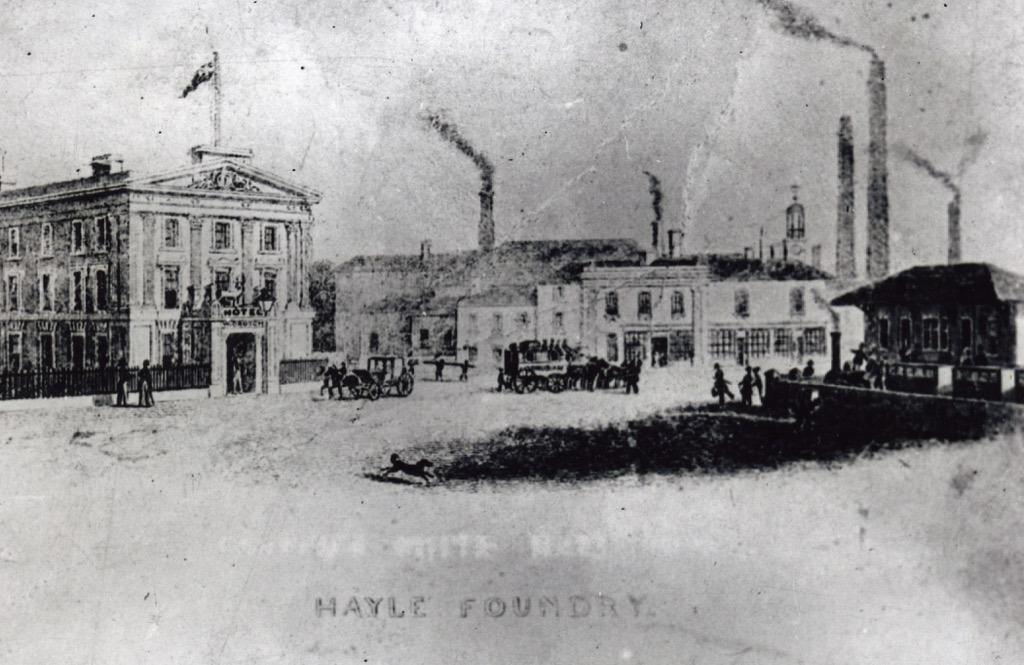
The story began in 1779, when John Harvey established a small iron foundry beside the tidal waters of Hayle. Cornwall’s mining industry was expanding rapidly, creating a huge demand for pumps, engines and heavy machinery capable of working in some of the deepest mines ever dug. Harvey recognised the opportunity and built a business based on quality craftsmanship and innovation.
As the company grew, so did Hayle. Houses, workshops and warehouses sprang up around the foundry, creating what became known simply as Foundry—one half of the town that we know today. Hundreds of local men found work as moulders, pattern makers, blacksmiths, fitters, boilermakers and engineers, while apprentices learned highly skilled trades that would be respected throughout the world.
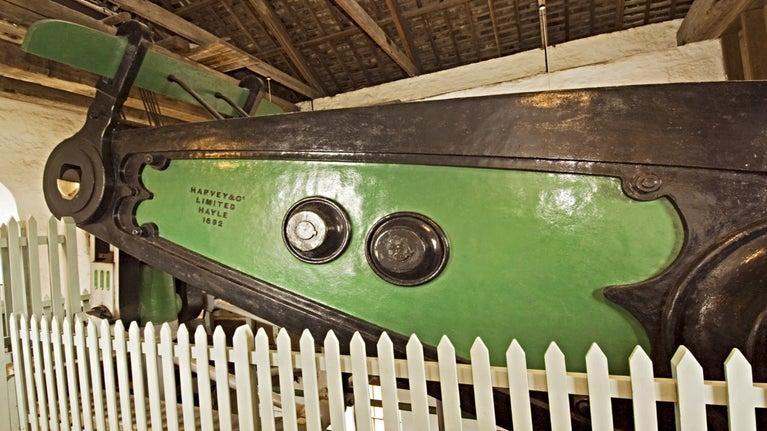
Under the leadership of Henry Harvey, the business expanded dramatically. Harvey’s became famous for manufacturing the powerful Cornish beam engines that drained water from mines, allowing miners to reach previously inaccessible depths. These remarkable machines were renowned for their efficiency and reliability and were exported around the globe.
But Harvey’s expertise extended far beyond mining. The foundry produced steam engines for flour mills, docks, waterworks, breweries, factories and pumping stations. It also manufactured ships’ engines, boilers, cranes, bridges and countless other pieces of industrial equipment that helped build the modern world.
One of Harvey’s greatest achievements can still be seen today. In the 1840s, the company cast the enormous Cruquius Beam Engine for the Netherlands. Built to help drain the vast Haarlemmermeer Lake, it remains the largest surviving Cornish beam engine ever constructed and is now preserved as a museum. More than 180 years later, visitors can still admire the remarkable craftsmanship that originated in Hayle.
Harvey’s Foundry also maintained close links with some of Cornwall’s greatest engineers. Richard Trevithick, the pioneer of high-pressure steam power, married Jane Harvey, making him part of the Harvey family. Although Trevithick eventually pursued engineering ventures around the world, his connection with Hayle remains an important chapter in the town’s history.
By the late nineteenth century, Harvey’s employed well over a thousand people and had become one of the largest employers in Cornwall. The company’s reputation for excellence meant that engineers travelled from Hayle to install and maintain machinery across Europe, Africa, Australia and the Americas. Wherever mining flourished, there was a good chance that equipment built in Hayle was helping to keep it running.
Changing technology and the decline of Cornwall’s mining industry eventually brought difficult times. Harvey’s merged with other engineering firms before the foundry finally closed during the twentieth century. Yet its influence lives on. Many of the original buildings remain, and the former foundry forms an important part of the Cornwall and West Devon Mining Landscape UNESCO World Heritage Site, recognising Hayle’s extraordinary contribution to industrial history.
Today, it’s hard to imagine the noise of the furnaces, the glow of molten iron and the constant ring of hammers that once echoed across the town. Yet for generations, Harvey’s Foundry stood as a symbol of Cornish ingenuity, producing engineering that was trusted around the world.
From a single blacksmith’s workshop to a global engineering giant, Harvey’s Foundry helped put Hayle on the map—and left a legacy that still inspires pride today.