Hayle and Loggans Mill
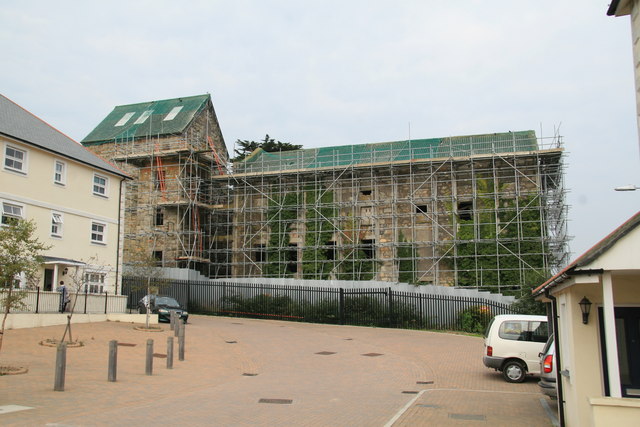
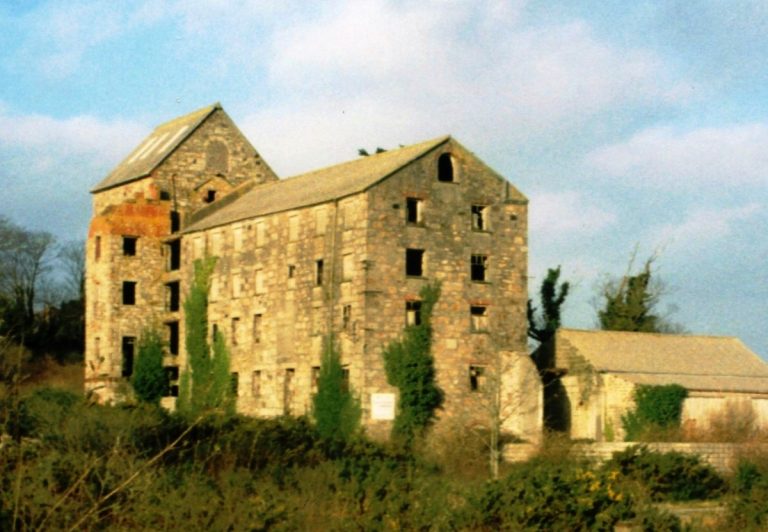
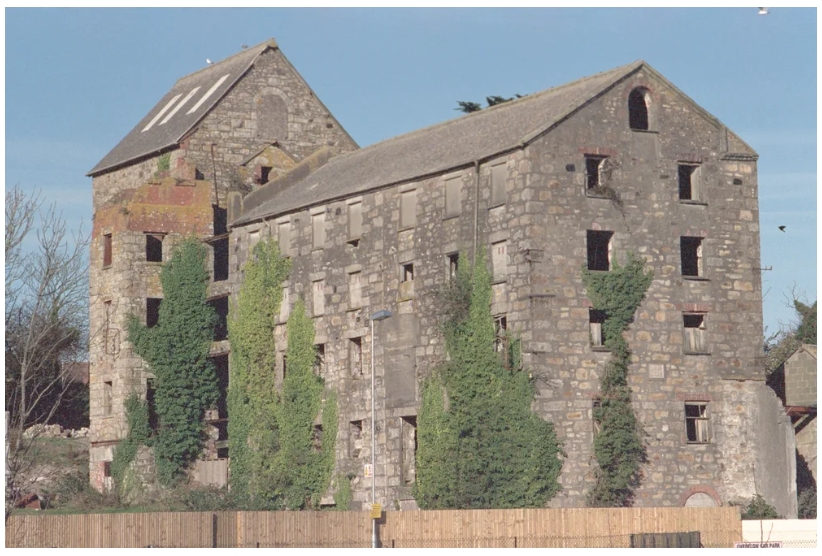
Loggans Mill is one of Hayle’s oldest and most important industrial landmarks. Standing at the eastern gateway to the town, the imposing granite building reflects Hayle’s long history as a centre for milling, engineering and trade.
A Thousand Years of Milling
The Loggans site has been associated with milling for centuries. A mill almost certainly existed here before the Norman Conquest, and it was recorded as part of Connerton Manor in the Domesday period. The name “Luggan” appears in documents dating from around 1150, while Sir William Godolphin is recorded as building a watermill on the site in 1539.
The Victorian Flour Mill
The present mill owes much of its appearance to the 19th century. William Hosken leased the mill in 1810, and under the Hosken family it became one of Cornwall’s leading flour mills.
Disaster struck in 1852, when a major fire destroyed much of the building. Rather than simply rebuild it, William Hosken created a much larger, five-storey mill using the latest technology. It was expanded again in 1884, becoming one of the most advanced steam-powered roller mills in the county, complete with electric lighting—remarkably modern for its day.
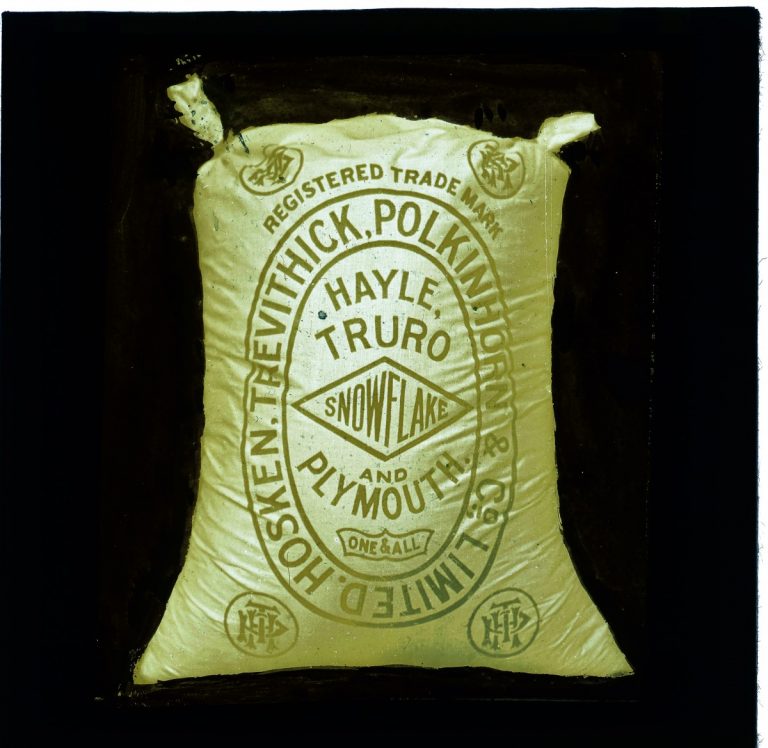
Hosken, Trevithick & Polkinhorn (HTP)
In 1890 the milling business became part of Hosken, Trevithick & Polkinhorn Ltd (HTP), a huge Cornish agricultural and milling company.
HTP grew into one of the largest businesses in Cornwall, operating:
- Loggans Mill
- Paddy’s Mill at Copperhouse
- Wholesale grocery businesses
- Flour production
- Animal feed manufacturing
- Shipping and transport
- Large farms across Cornwall
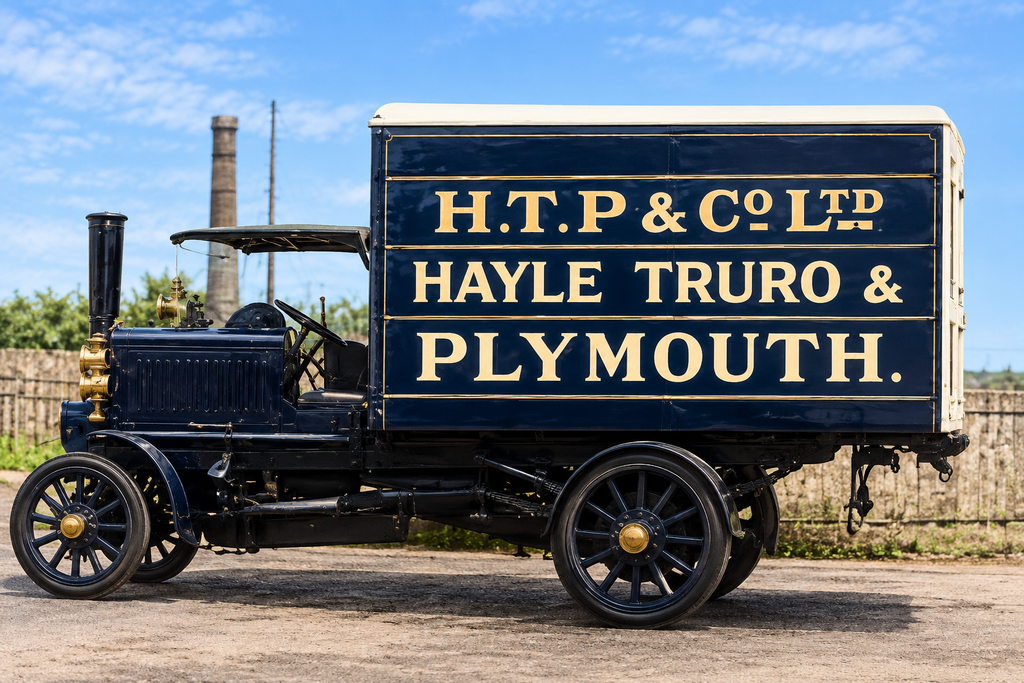
By 1913 the company owned around 50 horses, traction engines, lorries and coastal vessels, supplying flour and agricultural products throughout Cornwall and beyond.
Why Loggans Mill Was Important
The mill was ideally situated beside the old Hayle Railway and close to the main road into Hayle. Wheat arrived by coastal ship into Hayle Harbour before being transported to the mill. Finished flour was then distributed across West Cornwall.
For many years it was one of the largest employers in the Hayle area and played a major role in supplying flour to Cornwall’s growing population.
Decline
During the 20th century larger, more modern milling companies made smaller regional mills less competitive.
HTP’s milling business was purchased by Spillers in 1936, ending nearly 130 years of Hosken family involvement. Commercial milling gradually ceased, and the building eventually fell into disuse.
The Building Today
Today Loggans Mill is a Grade II Listed Building and is recognised as one of Cornwall’s most significant industrial monuments. Despite many years of dereliction, it remains the largest listed industrial structure in Cornwall and dominates the entrance to Hayle. Restoration proposals have been discussed for many years because of its historical importance and its prominent location.
Interesting Facts
- Milling has taken place on the site for well over 500 years, and possibly for nearly 1,000 years.
- The present building dates largely from 1852, following the devastating fire.
- It was one of Cornwall’s earliest mills to adopt modern roller milling technology.
- At its peak, HTP was one of the largest commercial businesses in Cornwall.
- Loggans Mill remains one of the most recognisable historic buildings in Hayle.
This story illustrates how Hayle was not only famous for engineering giants such as Harvey’s and the Cornish Copper Company, but also for its thriving milling industry, which fed much of West Cornwall for generations.