
Loggans – A History of Transport
From horse-drawn carts to the modern A30
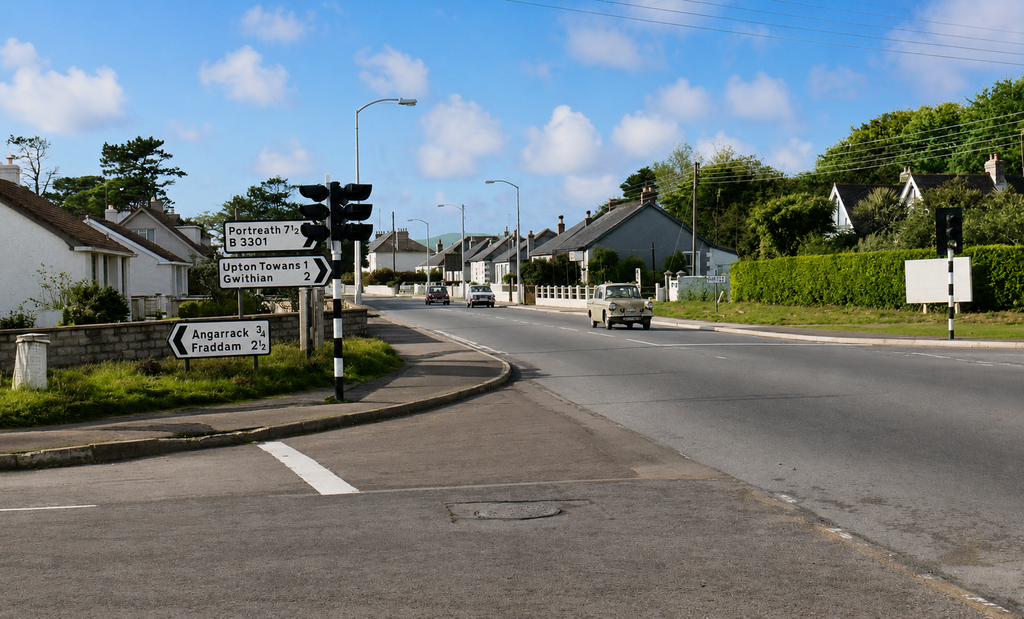
Today, Loggans is one of the busiest transport gateways into Hayle. Cars, lorries, delivery vehicles and holiday traffic pass through every day, with the A30 carrying traffic between west Cornwall and the rest of the county. But long before the modern roads and roundabouts, Loggans was already an important route for people, goods and trade.
The history of transport around Loggans is closely tied to the growth of Hayle itself. Its roads connected the agricultural hinterland with the harbour, the copper smelting industries, the foundries and the growing settlements around Copperhouse and Foundry.
Before the motor car – roads, horses and carts
For centuries, travel around Loggans would have been dominated by walking, horses, carts and carriages. Roads were often rough, muddy and difficult to negotiate, particularly during the winter months. Moving heavy goods such as grain, flour, coal, timber and agricultural produce required horses and sturdy wagons.
The old road network was vital to Hayle’s development. Historic assessments identify the earlier route between Angarrack, High Lanes and Foundry as one of the important pre-19th-century roads serving the settlement. Evidence of the historic road system survives in milestones shown on early Ordnance Survey maps dating back to the beginning of the 19th century.
These routes connected farms and villages with Hayle’s industrial heart, where goods could be moved onward by sea or through the growing railway network.
The old roads were not merely local lanes. They formed part of the wider network linking communities across west Cornwall, allowing market traders, carriers, farmers and travellers to move between settlements long before modern transport made journeys comparatively effortless.
Loggans Mill – a destination for transport
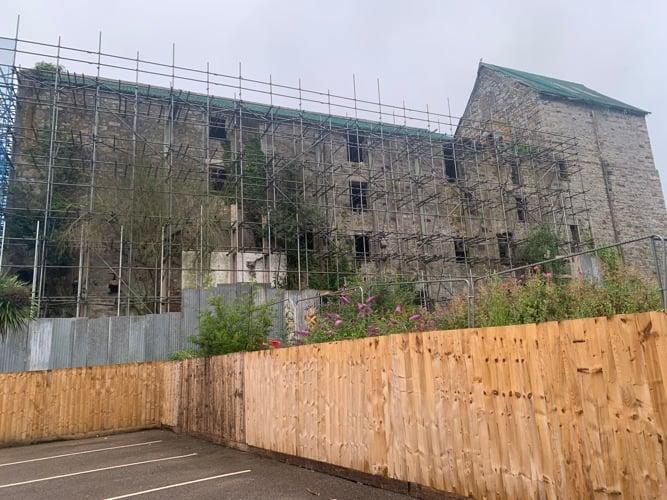
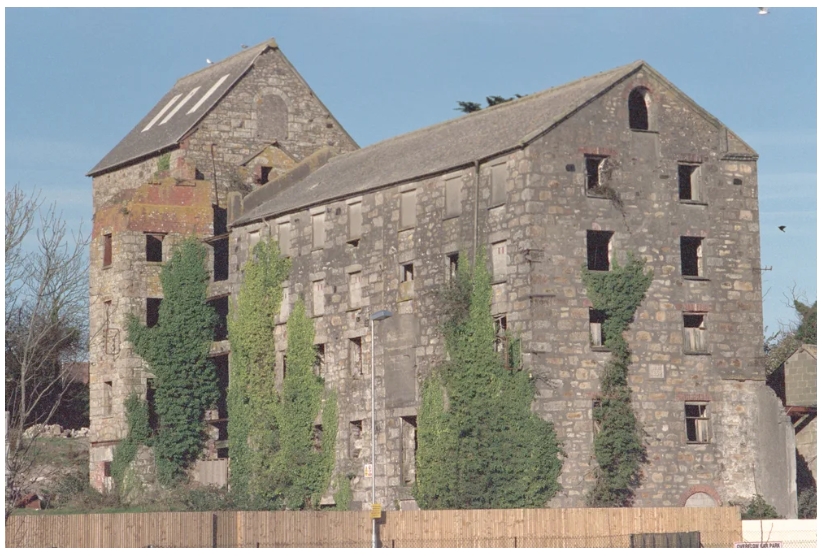
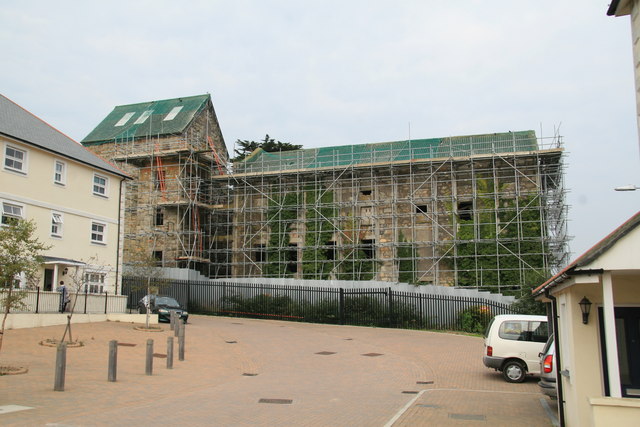
One of the most recognisable landmarks in Loggans is the old mill, which has stood beside the route into Hayle for generations.
Milling at Loggans goes back a very long way. A mill is recorded as belonging to Connerton Manor in the Domesday Survey of 1085, while the name Loggans appears in local records around 1150. The site is therefore associated with the production of flour for almost a thousand years.
The present five-storey granite building dates from 1852, when William Hosken rebuilt and modernised the mill following a devastating fire the previous year. It became one of Cornwall’s largest and most efficient flour mills.
Imagine the transport activity around the mill in its heyday. Grain arriving from farms, supplies being delivered, flour being loaded for distribution, horses and wagons moving in and out, and workers travelling to and from their employment. The mill was an important destination in its own right, helping to bring commercial activity to this part of Hayle.
The mill remained in operation until the late 1930s, after which it was used for agricultural supplies.
The railway changes everything
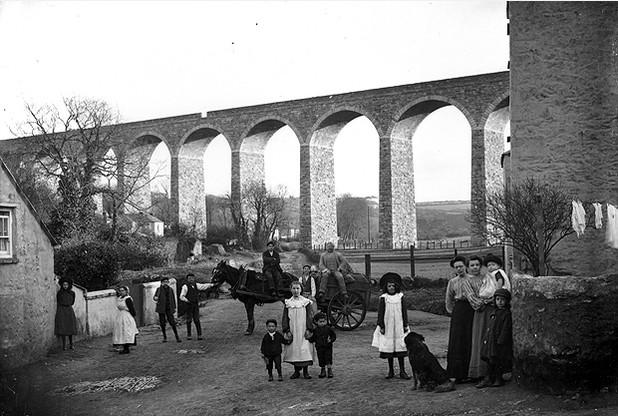
The arrival of the railway was one of the biggest transport changes Hayle would ever experience.
The Hayle Railway opened its first section for goods traffic on 29 December 1837, connecting the Redruth area with Hayle. Passenger services followed on 22 May 1843.
The original railway was very different from the railway we know today. It used light rails and granite track supports, and trains were hauled up steep inclines using fixed steam engines and ropes. The Angarrack and Penponds inclines were particularly challenging, limiting the size and weight of locomotives that could operate on the line.
In 1852, a new railway route was opened, bypassing the steep inclines and crossing Hayle on a high-level viaduct. This new line formed the basis of the railway route still used today.
The change made travel and the movement of goods much more efficient, helping Hayle connect more easily with the wider railway network and destinations across Cornwall and beyond.
A railway with an explosive purpose
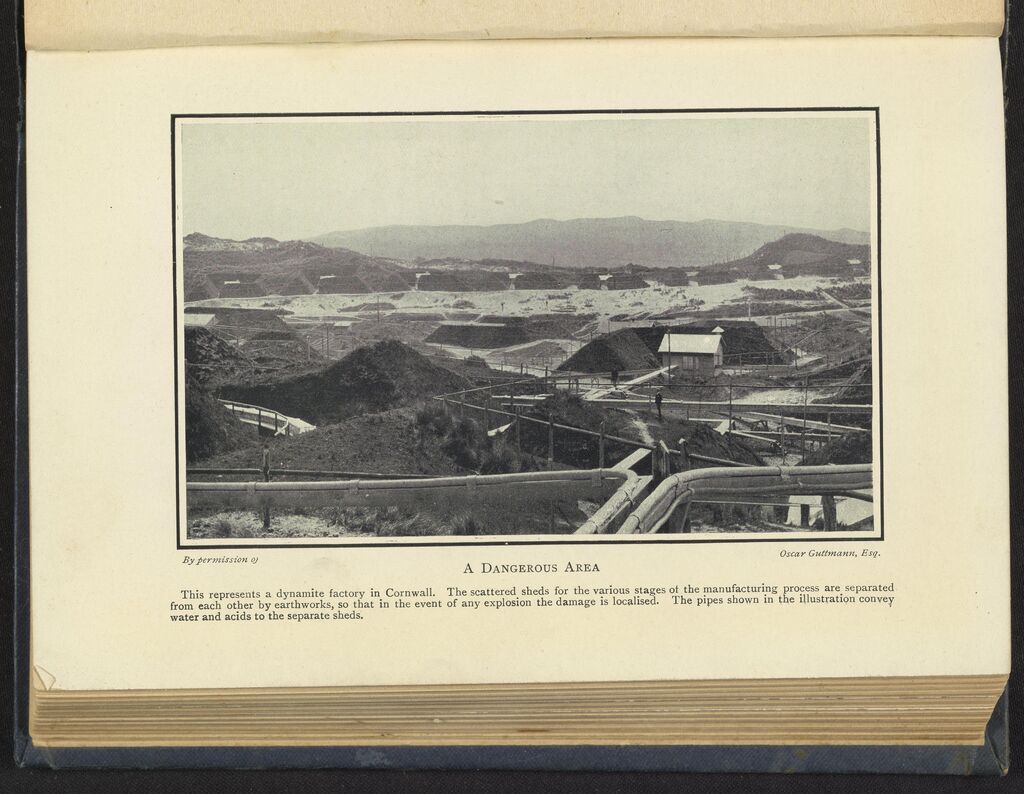
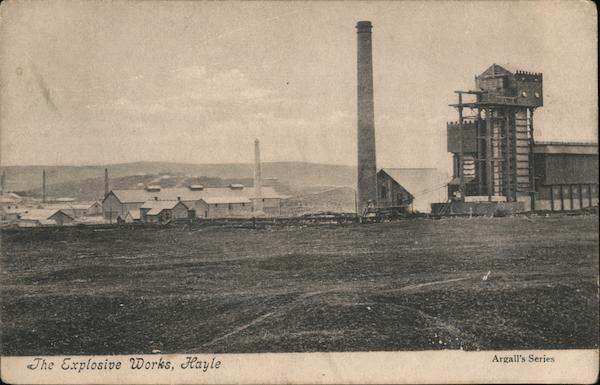
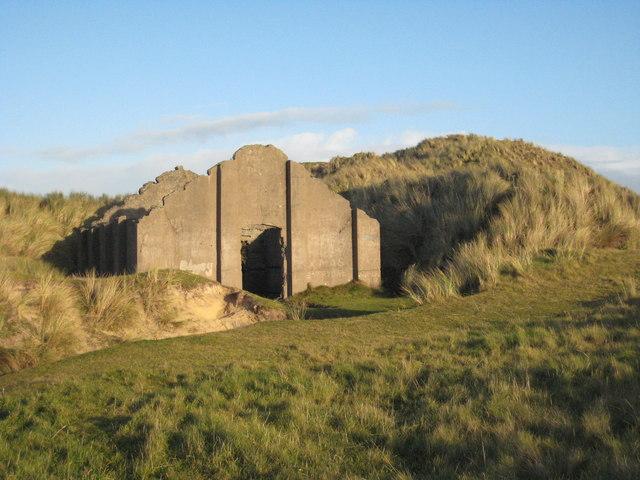
One of the more unusual transport stories associated with Loggans was the railway built to serve the National Explosives Works at Upton Towans.
The explosives works had originally used a railhead at Gwinear Road, but during the First World War a railway spur was constructed from Hayle to the works at Upton Towans. It opened in 1917.
The line was approximately two and a half miles long and used parts of existing railway infrastructure, including the old Hayle Railway route alongside Copperhouse Creek and the Hayle wharves branch. A new section was built from the Lethlean Lane level crossing towards the explosives works.
Its purpose was to transport explosives from the factory to storage and shipping facilities, including Dynamite Quay at Lelant. Wagons travelled via Hayle, St Erth and the St Ives branch railway, while explosives were also loaded at North Quay.
The railway was short-lived. The explosives works closed in 1920, but traces of the railway remained for years afterwards. Some of its route can still be identified in the landscape, and the surviving Dynamite Bridge is a reminder of this unusual chapter in Hayle’s transport history.
From horse power to motor power
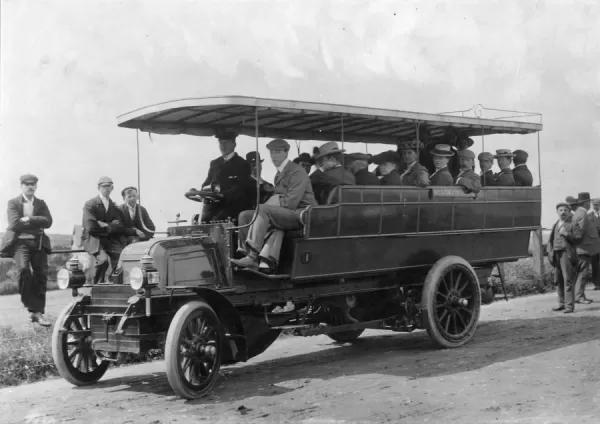


By the early 20th century, transport was changing rapidly. Motor cars, motor lorries and buses began to replace horse-drawn transport, although horses remained part of everyday life for many years.
The roads around Loggans became increasingly important as motor traffic grew. Hayle’s position on the main west Cornwall route meant that traffic heading towards St Ives, Penzance, Camborne and Redruth passed through or close to the area.
For local people, buses brought a new freedom. Journeys that once required walking, cycling or arranging horse transport could increasingly be made by public transport. People could travel to work, visit neighbouring towns, shop, attend appointments or explore further afield.
The growth of private motor cars gradually changed the character of the roads. What had once been routes shared by pedestrians, horses, carts and occasional motor vehicles became increasingly busy roads carrying traffic throughout the day.
The A30 and Loggans Moor
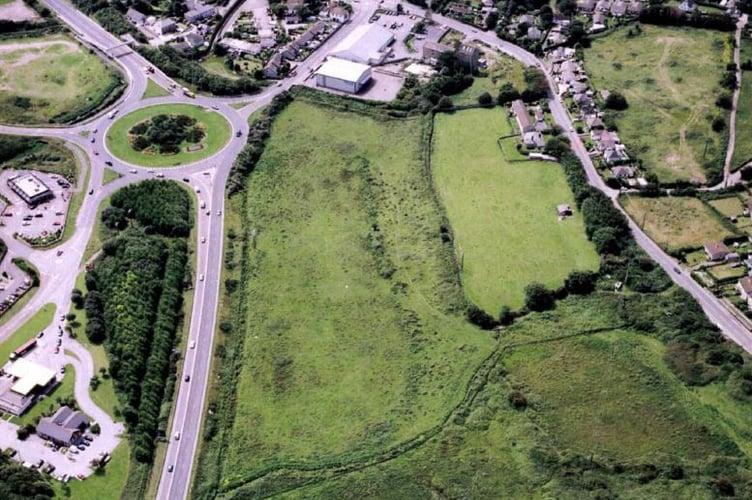
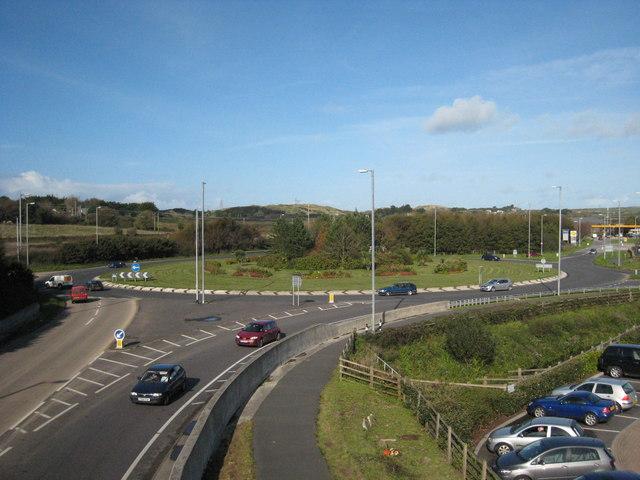
The modern A30 is now the dominant transport feature of Loggans.
Over the years, increasing traffic brought congestion, particularly during the summer when visitors travelled into Cornwall. Loggans Moor became an important junction for traffic entering Hayle and continuing towards west Cornwall.
In June 2014, improvement works were undertaken at Loggans Moor roundabout to increase capacity, widen approaches and reduce delays. The Highways Agency described congestion as particularly severe during peak periods and the summer tourist season.
The roundabout and surrounding roads have become familiar to generations of local motorists. Yet the changes are part of a much longer story of transport adapting to the needs of a growing population, expanding commerce and increasing tourism.
A crossroads through the ages
Loggans has seen an extraordinary transformation.
From ancient tracks serving farms and settlements, to turnpike-era roads, horse-drawn wagons, the pioneering Hayle Railway, industrial branch lines, buses, motor cars and the modern A30, the area has continually adapted to the changing demands of transport.
The old mill remains perhaps the most visible reminder of a time when goods moved at a very different pace. The railway traces tell another story, while the road network continues to evolve around us.
Next time you’re waiting in traffic at Loggans Moor, it is worth remembering that this isn’t simply a modern road junction. It is part of a transport corridor with centuries of history behind it.
Loggans has always been on the move — the only thing that has changed is how quickly we travel.