
Penpol House
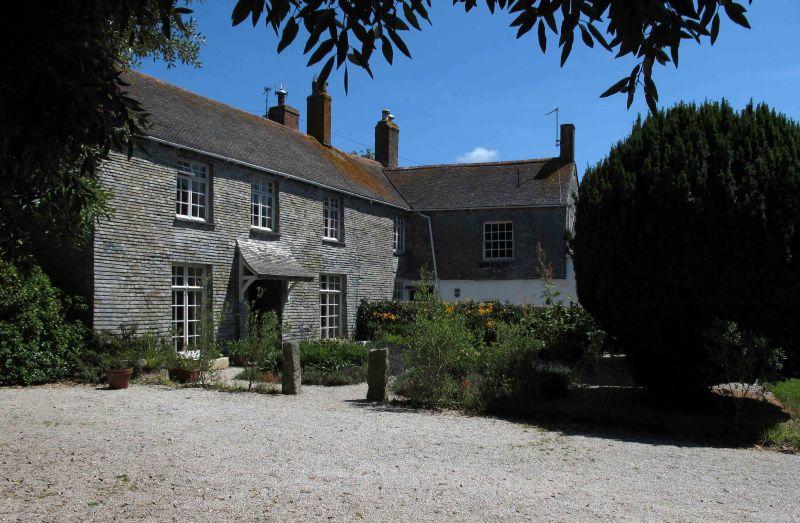
Penpol House is one of Hayle’s oldest surviving homes and predates the town itself. Before Hayle became an important industrial port in the 18th century, the area consisted of scattered settlements around the Hayle Estuary. The name “Penpol” comes from Cornish and is generally interpreted as meaning “head of the pool”, referring to its position overlooking what was once a muddy tidal inlet. Some parts of the house are believed to date back to the medieval period, with documentary references to the Penpol estate from the 13th century. Architectural evidence, including remnants of an earlier steep roof structure, suggests that an even older building once stood on the site.
The house passed through several prominent Cornish families:
- It was owned by the Godolphin family by the late 14th century.
- In 1639, it was sold to Anthony Honeychurch of St Erth.
- It later passed to the Pendarves family of Bodriggy.
- In the early 1700s, John “Merchant” Curnow leased the estate. Curnow became a key figure in Hayle’s development, helping establish quays along the estuary as copper smelting expanded from around 1740. His work laid the foundations for Hayle’s growth into one of Cornwall’s great industrial towns.
Through marriage, Penpol House came into the hands of the Millet family in the late 18th century. Richard Oke Millet eventually purchased the estate outright from Lord Arundell. During the 19th century the Millets were influential local landowners, and their estate surrounded much of what became the expanding town of Hayle.
One of the house’s more unusual historical episodes occurred in the 1860s, when Dr Richard Millet was tried after being accused of poisoning his brother with aconite allegedly mixed into horseradish sauce. The case attracted considerable attention, but he was ultimately acquitted.
In the late 19th century the property became associated with the Ellis family, who had long-standing links with the Cornish copper industry. Colonel John Ellis purchased Penpol House in 1921. Later, Major Thomas Ellis donated part of the estate to Hayle, creating what is now Ellis Park, while much of the remaining land was compulsorily purchased during the 20th century as the town expanded. Penpol Avenue itself was originally the elm-lined private drive leading to the house. Today, Penpol House is a Grade II listed building. Although it has been altered and enlarged over several centuries—from its Tudor origins through Georgian and Victorian remodelling—it still retains significant historic features, including 18th-century interiors, garden walls, granite gate piers and a rare cast-iron hand pump. It remains one of the most historically important domestic buildings in Hayle because its story mirrors the town’s transformation from a rural estuary into one of Britain’s leading industrial ports.