
The Dynamite Works
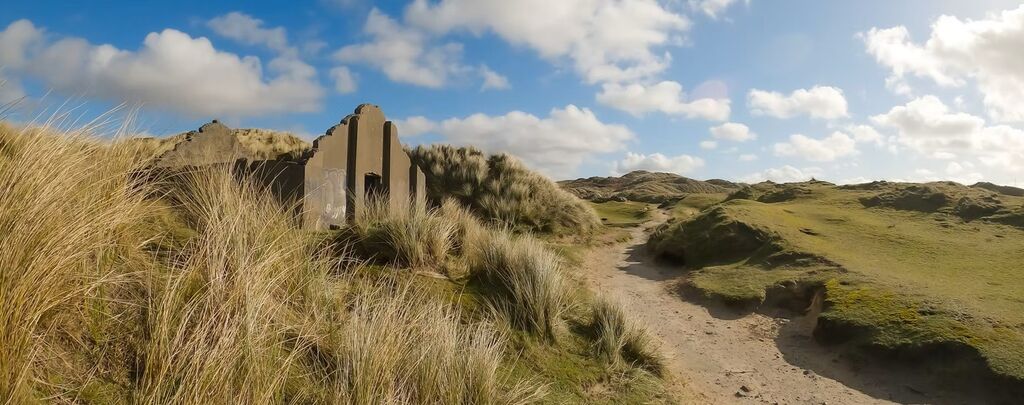
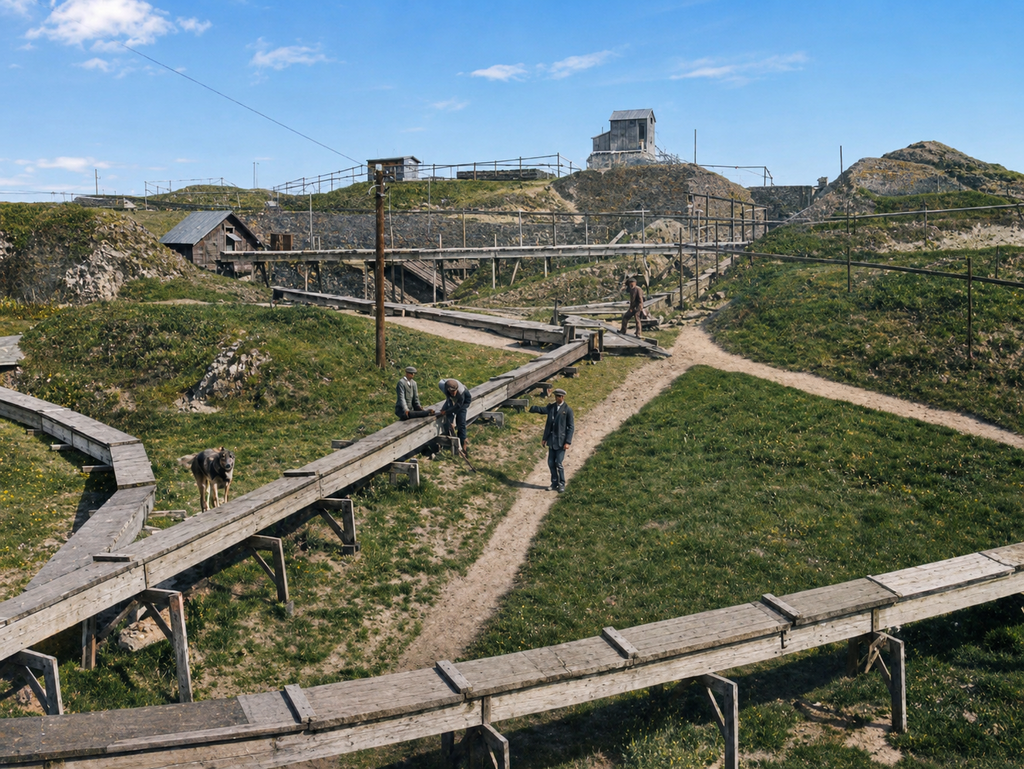
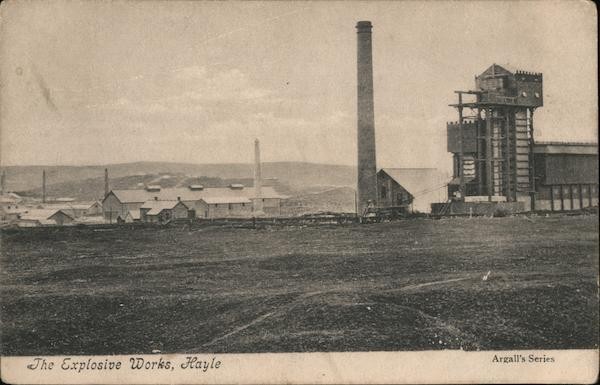
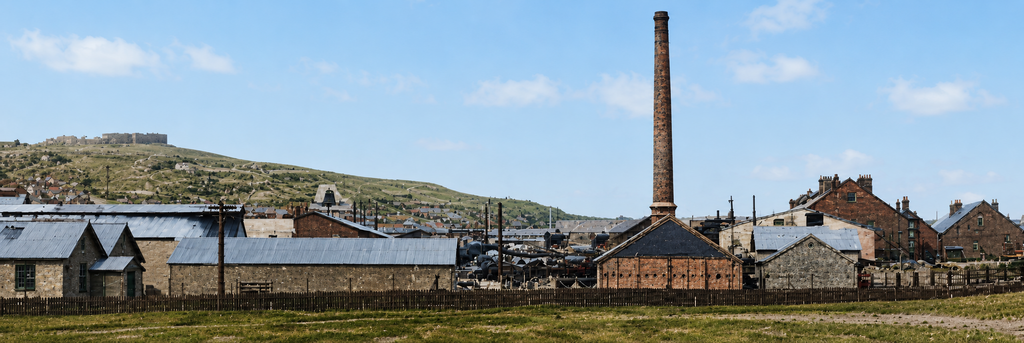
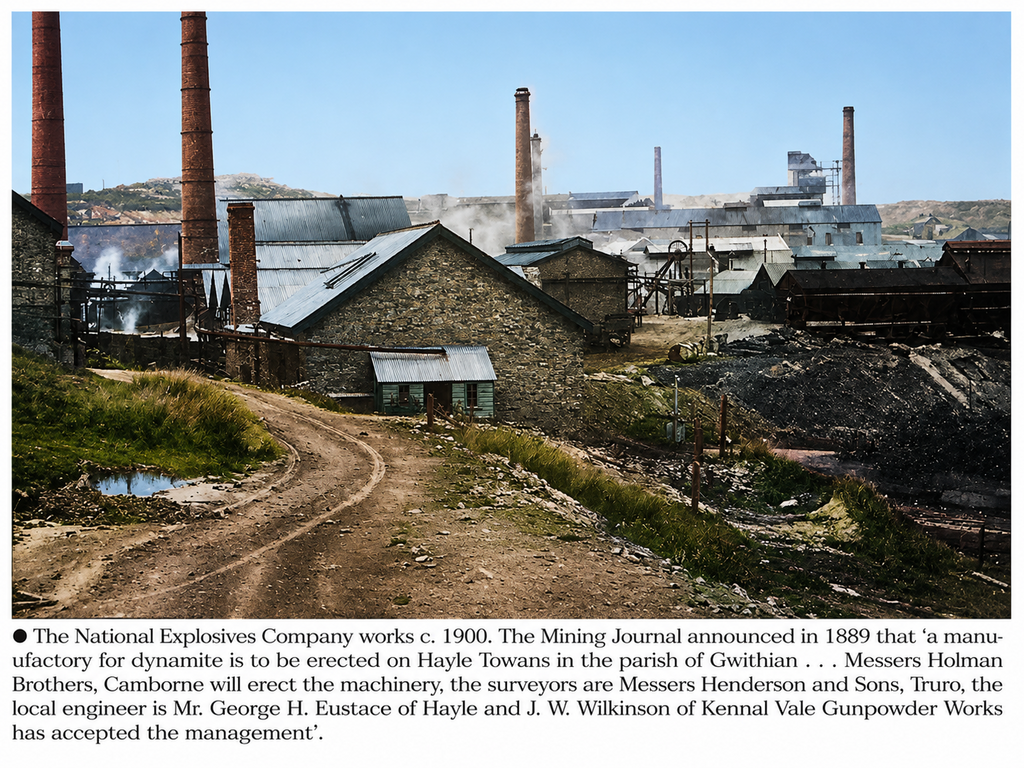
The Dynamite Works, officially known as the National Explosives Works, was one of Hayle’s most remarkable and least-known industrial sites. Located on Upton Towans, just north of Hayle, it operated from 1888 until 1920 and was once among Britain’s leading manufacturers of high explosives.
Why it was built in Hayle
The factory was established by the Kennall Gunpowder Company as demand grew for dynamite, which was replacing traditional gunpowder in Cornwall’s mines. Upton Towans was chosen because:
- The high sand dunes helped contain explosions.
- It was isolated from the town yet close enough for workers.
- Hayle had excellent rail and harbour connections for importing chemicals and exporting explosives.
- Local engineering firms could build and maintain the specialised machinery.
What was made there
Initially the works produced:
- Dynamite
- Gun cotton
- Nitro-glycerine
During the First World War the factory expanded dramatically to manufacture:
- Cordite (the smokeless propellant used in military ammunition)
- Gelignite
- Blasting gelatine
Production for the military became the site’s main purpose during the war.
The workforce
At its peak, the works employed well over 1,500 people, with some accounts suggesting around 1,800 workers during wartime. Many local women took on dangerous manufacturing roles during the First World War while men served in the armed forces.
A dangerous place
Despite careful planning, accidents did occur. Buildings handling explosives were separated by sand banks so that if one exploded, the blast would be contained.
One of the worst accidents happened on 4 September 1894, when an explosion in a mixing house killed two workers instantly. Although serious, incidents like this were relatively rare considering the huge quantities of explosives produced over more than thirty years.
Railway connection
The works had its own railway spur from the Hayle Railway, allowing raw materials to be delivered directly to the factory and finished explosives to be transported safely. The company even operated its own specially built steam locomotive fitted with a spark-arresting chimney to reduce the risk of ignition.
Closure
After the end of the First World War, military demand collapsed. Production ceased in 1919, and by 1920 the factory had closed. Much of the site was dismantled, although explosives continued to be stored there for several decades afterwards.
What remains today
Today, visitors walking across Upton Towans can still discover:
- The impressive listed nitric acid chimney.
- Concrete foundations of the processing buildings.
- Earth blast banks that separated the buildings.
- Storage magazines and nitrating pits hidden among the dunes.
- Remains of the railway embankment and industrial infrastructure.
These are among the best surviving remains of a Victorian explosives factory in Britain.
Did you know?
At its height, the National Explosives Works covered around 300 acres, making it one of the largest industrial complexes ever built on the Towans. Although Hayle is best known for Harvey’s Foundry and the Cornish Copper Company, the Dynamite Works played a crucial role in both Cornwall’s mining industry and Britain’s war effort during the First World War.