
The Growth of Housing in Industrial Hayle
In the eighteenth century, Hayle was a hive of industrial activity on a large scale.
The majority of workers lived in the farming areas of the St Erth Valley and Angarrack, as these places were already densely populated due to tin mining, together with tin stamping and corn mills.
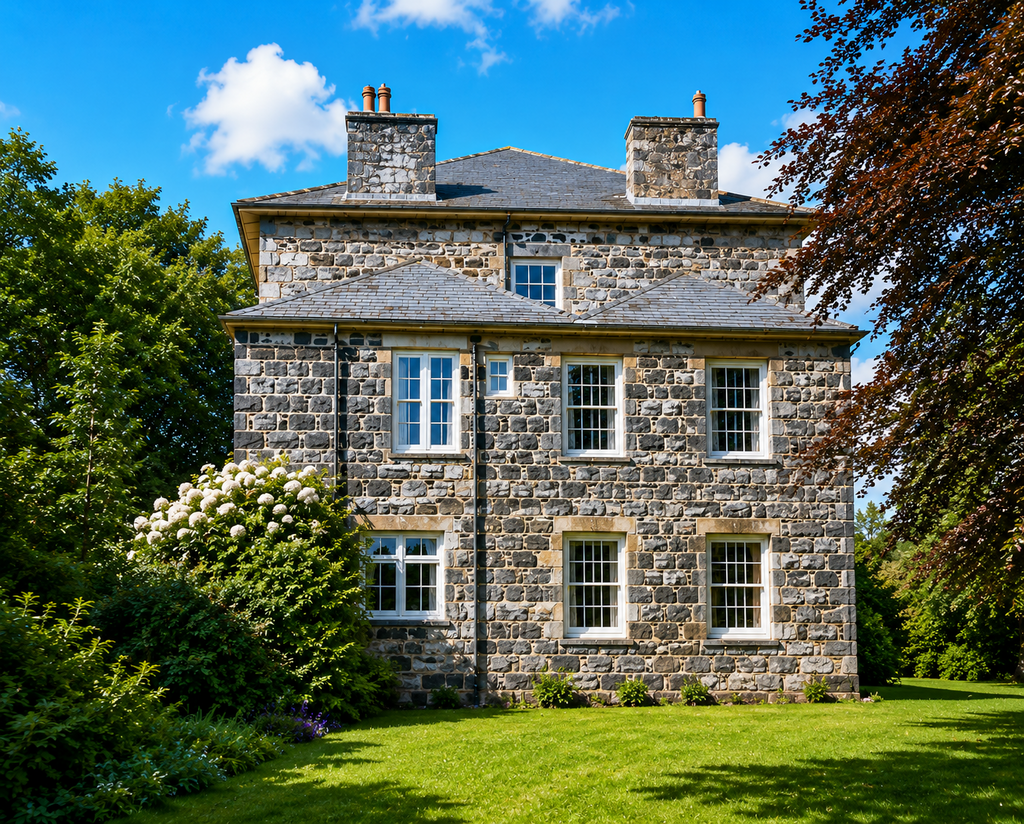
The earliest recorded residential properties directly associated with Hayle’s industries were built at Carnsew in 1758. The Cornish Copper Company (C.C.C.), which came to Hayle in 1756, was building residential properties by 1779 using scoria blocks. Scoria was the waste material produced during copper smelting and was moulded into building blocks of various sizes. These were used to construct many houses, including some along the Bodriggy foreshore, now known as Fore Street.
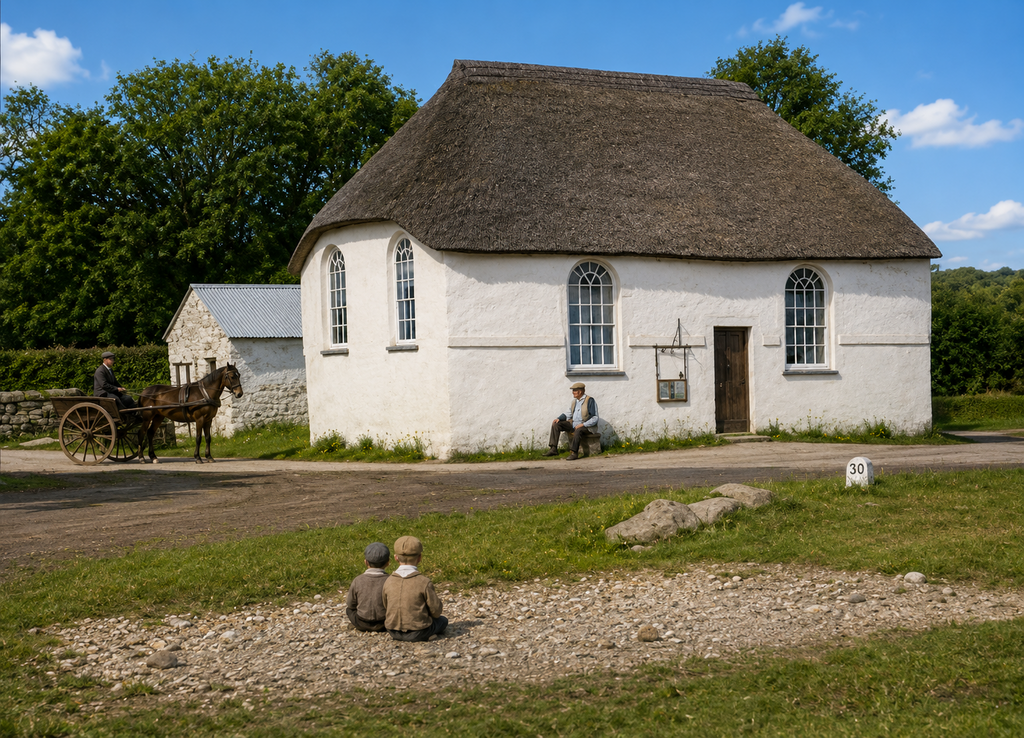
By 1785, there was a sufficiently large community to warrant the construction of a Methodist chapel, built entirely of scoria blocks. This original chapel was demolished in 1820. John Wesley is said to have preached there in 1787 and reportedly remarked:
“This building is unlike any other in England, both in its form and materials. It is exactly round and composed of wholly brazen slag, which I suppose will last as long as the earth.”
A new chapel was built in 1820 between what are now St John’s Street and Bodriggy Street. It remained in use until its closure in 1972.
Riviere House was built in 1791 on what is now the King George V Memorial Walk, and a number of cottages were also constructed in the Ventonleague area.
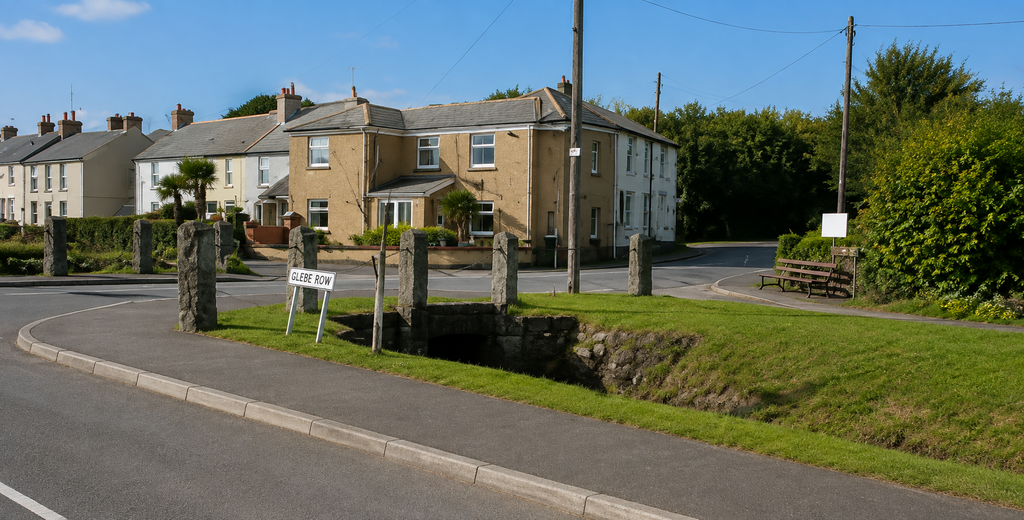
During the late eighteenth century, houses were also built at Glebe Row, part of the hamlet of Undercliff, Phillack. These were constructed by local tradesmen using scoria blocks purchased from the Cornish Copper Company.
Harvey’s of Hayle, established in 1779, began on a modest scale, employing around fifty men, most of whom came from St Erth. By 1791 there were only two substantial houses and a handful of cottages in the Foundry area. The major development of both Foundry and Copperhouse took place between about 1810 and 1830, coinciding with the rapid expansion of both foundries.
At Copperhouse, the Cornish Copper Company acquired leases on part of the Bodriggy Estate and laid out a grid of streets. Individual tenants built their own homes, sometimes in small groups, while Ventonleague expanded at the same time.
Near the quays, a Market House had been built by 1814, later replaced by a larger purpose-built market house in 1839. Many of the new houses were built not only for employees but also for local miners. A significant phase of development followed the acquisition of land around Copperhouse Creek, enabling the Cornish Copper Company to extend North Quay, construct East Quay, and create Penpol Terrace on reclaimed land. These houses were intended mainly for schoolteachers, sea captains and other professional people.
The expansion of Harvey’s Foundry also encouraged further settlement in the valley, including the construction of Drovers Row. As the company enlarged its stables to accommodate the growing number of draught horses needed for transporting heavy goods, additional cottages were required for the workforce.
By 1842, the Foundry settlement had developed a distinctly different character from Copperhouse. It contained large houses set within spacious grounds, together with only three or four rows of workers’ cottages. One of these was Mill Row, now known as Trelissick Row, where many employees of the hammer works and rope works lived. The rope works manufactured ropes for the ships built by Harvey’s. Workers also lived along Penpol Road. By 1840, Harvey’s employed more than 800 people at its foundries and wharves.
It is clear, however, that only a proportion of this workforce actually lived at Foundry, where many of the facilities were provided specifically for the benefit of the company. The first White Hart Hotel, built in 1824 (now the Masonic Lodge), and the second White Hart Hotel, built in 1838, were intended to accommodate and entertain visiting businessmen.
Harvey’s also built a school on Foundry Hill for the children of its employees, together with shops and an emporium operated by the company itself. Employees were often paid half of their wages in company tokens, ensuring they purchased their goods from Harvey’s Emporium. This practice continued until the introduction of the Truck Act, which required employers to pay workers entirely in legal currency, allowing them to shop wherever they wished.
The remarkable growth of Hayle during the late eighteenth and early nineteenth centuries transformed what had once been a collection of small settlements into one of Cornwall’s most important industrial towns. The houses, streets and public buildings created during this period remain a lasting reminder of the town’s extraordinary industrial heritage.