
The History of Riviera House
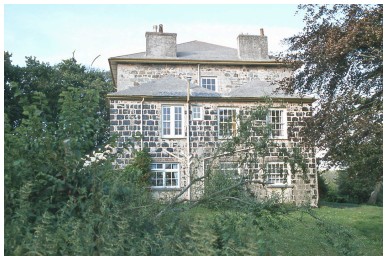
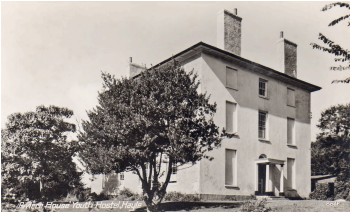
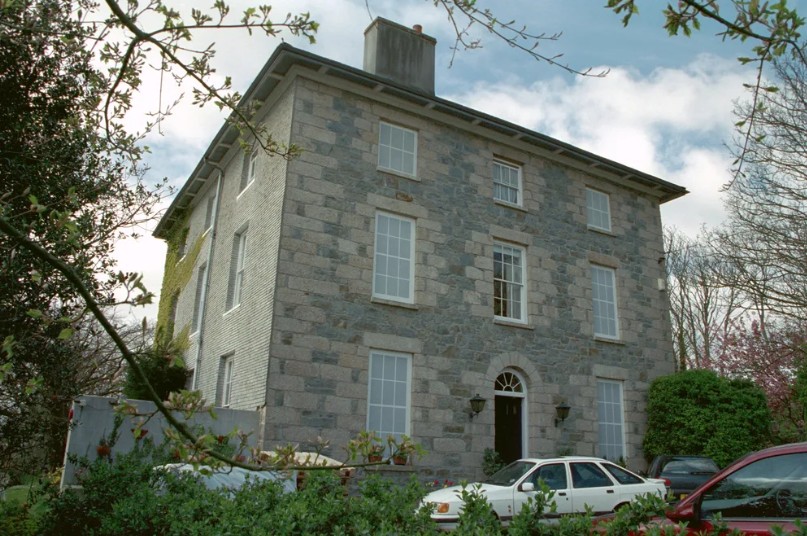
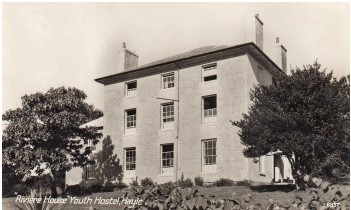
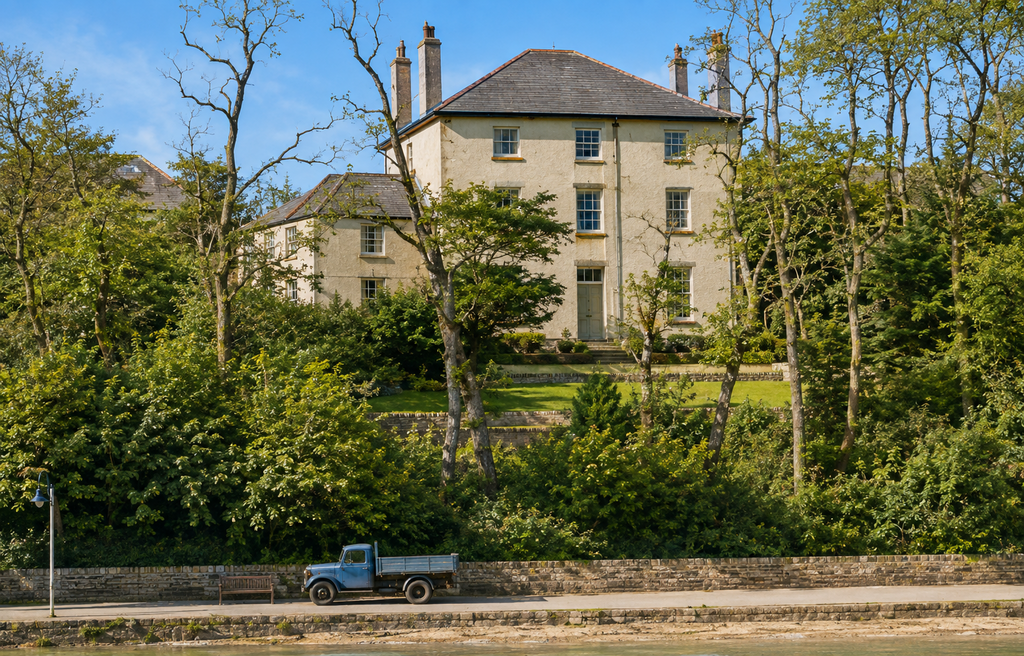
Riviere House (sometimes mistakenly written as “Riviera House”) is one of Hayle’s most historically significant Georgian houses. Standing above the King George V Memorial Walk overlooking the Hayle Estuary, it reflects the town’s transformation from a small settlement into a major industrial centre during the late 18th century.
Construction and early years (1791)
Riviere House was built in 1791 for John Edwards, who was the manager of the Cornish Copper Company. The company had established extensive copper smelting works at Hayle, and the house was intended as a prestigious residence for one of its senior figures.
Architecturally, it is a fine Georgian mansion featuring:
- Three storeys over a cellar.
- A symmetrical façade with sash windows.
- Stuccoed entrance front and slate-hung garden elevation.
- Original panelled doors, shutters, staircase and decorative plasterwork surviving inside.
The building was constructed using a mixture of local granite, rubble stone and, unusually, copper slag blocks in parts of the basement and later extension—a reminder of Hayle’s industrial heritage.
A connection with Humphry Davy
One of the house’s most famous stories concerns the young Humphry Davy.
While John Edwards lived there, the scientist Davies Gilbert brought the teenage Davy to Riviere House. There, Davy encountered a well-equipped scientific laboratory for the first time. According to contemporary accounts, he was thrilled by the instruments and eagerly experimented with an air pump—an experience believed to have helped inspire his later scientific career.
Later owners
After John Edwards, the house became the home of Joseph Carne, a distinguished geologist and Fellow of the Royal Society. During the 19th century it remained one of Hayle’s principal residences.
20th century
The house has had several notable occupants and uses:
- It became the home of novelist Compton Mackenzie during the early 20th century.
- During the Second World War it was used to billet American troops preparing for the 1944 D-Day landings.
- After the war it served for many years as Hayle Youth Hostel, introducing generations of visitors to the town.
Today
Riviere House is now divided into private flats but retains much of its original Georgian character. It was designated a Grade II listed building in 1984 because of both its architectural quality and its historical associations.
Its importance lies in several areas:
- It is one of Hayle’s best-preserved Georgian houses.
- It illustrates the prosperity generated by the copper industry.
- It has direct links with Humphry Davy’s early scientific inspiration.
- It forms an important landmark within the Hayle Conservation Area overlooking the estuary.
The house remains one of the finest surviving reminders of the period when Hayle was at the forefront of Britain’s copper-smelting industry.